
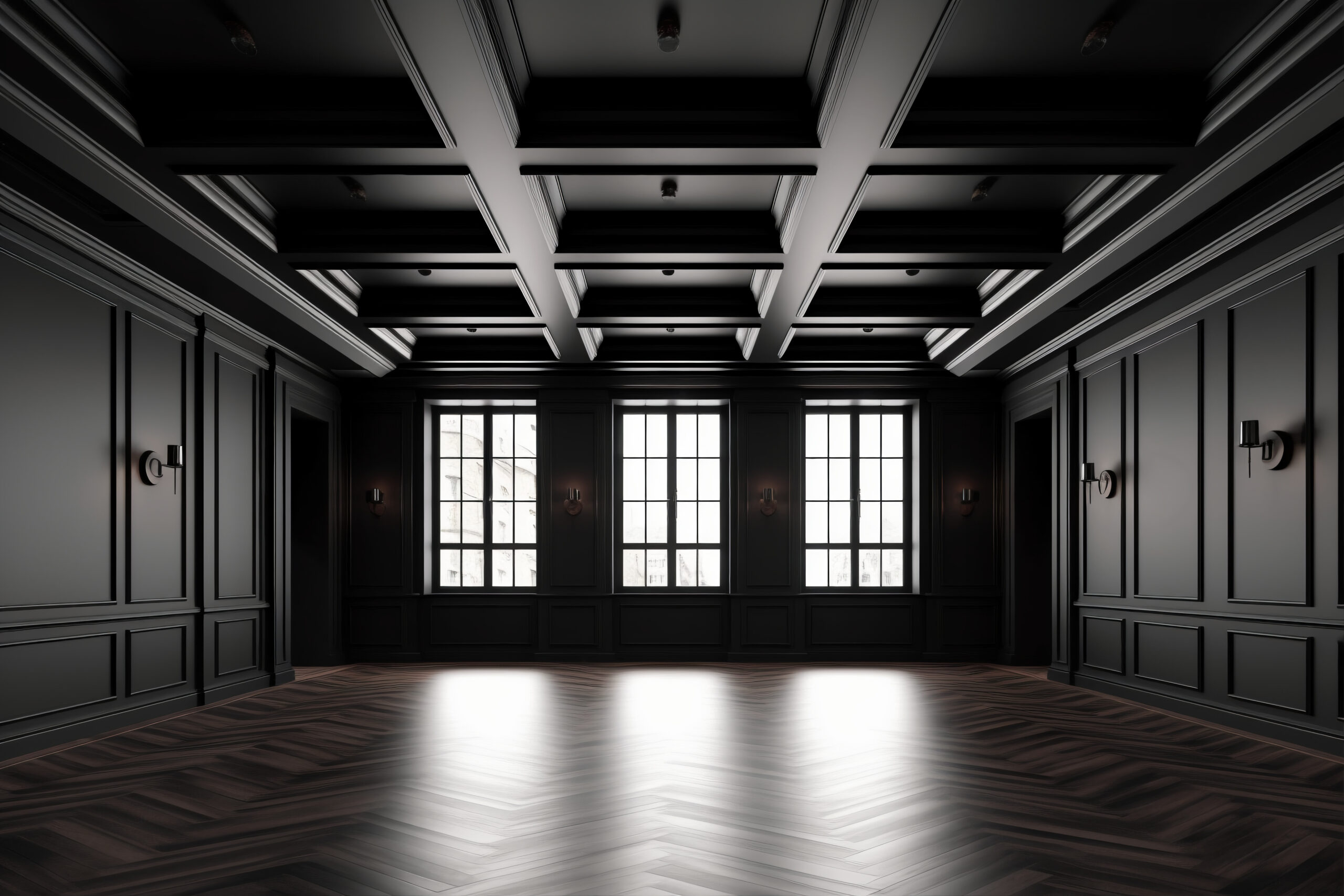
A ceiling can strongly influence the atmosphere, proportions, and visual character of an interior. While light ceiling finishes are common, darker surfaces can create a more dramatic and contemporary appearance. black suspended ceiling tiles can add depth to a room while working with a suspended grid system that provides practical access to wiring, lighting, ventilation, and other services above the ceiling. This type of ceiling can suit offices, entertainment spaces, retail interiors, studios, restaurants, and selected residential areas. With the right lighting, room proportions, tile pattern, and surrounding finishes, a dark ceiling can become an intentional design feature rather than simply a functional surface.
Creating a Modern Ceiling Appearance
Dark ceiling surfaces can change how a room feels. They often create a stronger visual contrast with walls, furniture, flooring, and lighting fixtures. This makes them useful when the goal is to establish a modern or industrial-inspired interior.
A suspended ceiling also creates a structured appearance because the tiles are installed within a visible or concealed grid. The grid layout can be coordinated with lighting fixtures and other ceiling-mounted elements. Instead of treating the ceiling as an afterthought, homeowners and designers can use the arrangement to create a balanced overall composition.
In larger rooms, a dark ceiling can add visual definition to an otherwise open space. In commercial environments, it may also help establish a particular atmosphere without requiring major architectural changes.
Selecting the Right Tile Finish
Not every black ceiling tile has the same appearance. Some products have a smooth surface, while others include subtle textures, perforations, patterns, or acoustic finishes. The choice should reflect both the design goals and functional requirements of the room.
A smooth surface can create a simple and contemporary appearance. Textured tiles may provide additional visual interest and can help reduce the uniform look of a large ceiling. Perforated options are often considered where acoustic performance is important.
The amount of light in the room should also influence the selection. A very dark matte surface absorbs more visual attention and can make a ceiling feel deeper. A slightly reflective finish can interact differently with artificial lighting and may create a more noticeable visual effect.
Coordinating the Ceiling Grid
The grid is an important part of a suspended ceiling because it supports the tiles and establishes the overall pattern. With a dark ceiling, the grid can either blend into the surface or provide visible definition.
A matching dark grid can produce a continuous appearance where individual tiles and framing elements appear visually connected. This approach is often suitable for contemporary interiors and spaces influenced by industrial design.
A contrasting grid can make the ceiling pattern more noticeable. This can be useful in rooms where geometric organization is an important part of the design. The spacing and alignment of the grid should remain consistent so that lighting fixtures, vents, speakers, and other components appear properly integrated.
Using Lighting With a Dark Ceiling
Lighting plays a particularly important role when using a dark ceiling. Since dark surfaces can absorb more light visually, the room may require careful placement of artificial illumination.
Recessed fixtures can provide a clean appearance while distributing light across work areas. Linear lighting can emphasize the geometry of the ceiling and create a contemporary look. Pendant fixtures can provide decorative interest, particularly in dining areas, reception spaces, restaurants, and other social environments.
The position of lighting should also be coordinated with furniture and room functions. A workspace may need stronger task lighting, while a lounge or entertainment area may benefit from softer illumination.
Indirect lighting can also be used around selected ceiling details. When light is directed toward walls or architectural features, it can balance the darker overhead surface and create greater depth.
Making a Small Room Feel Balanced
Dark ceilings are sometimes avoided in smaller rooms because they can appear visually heavy. However, the result depends on the complete design rather than the ceiling color alone.
A small room can remain balanced when the walls, flooring, lighting, and furniture provide enough contrast. Light-colored walls can help offset a dark ceiling. Bright task lighting can also prevent the room from feeling excessively enclosed.
Another approach is to use dark ceiling tiles in selected areas rather than across an entire space. A darker ceiling zone can define a seating area, reception counter, kitchen island, or workspace without visually dominating the entire room.
Room height also matters. Higher ceilings generally provide more flexibility for darker finishes because there is greater vertical space between the ceiling and occupants.
Creating an Industrial Interior
Black ceiling systems are frequently associated with industrial-inspired interiors because they can complement exposed mechanical and structural elements. When ducts, pipes, conduits, or lighting systems remain visible above the ceiling plane, a dark overhead finish can help create a cohesive visual environment.
The industrial style does not require every surface to be dark. Wood, concrete-inspired flooring, metal furniture, glass partitions, and warm lighting can provide contrast.
In offices, studios, restaurants, and creative workspaces, this combination can create a visually distinctive atmosphere while maintaining the practical benefits of a suspended ceiling.
Improving Acoustic Comfort
Ceiling tiles can serve more than a decorative purpose. Certain suspended ceiling products are designed to help manage sound within a room.
Acoustic performance can be especially useful in offices, classrooms, conference rooms, entertainment areas, and commercial environments where multiple conversations occur at the same time. Tile construction, surface texture, density, and perforation can influence how sound behaves.
When selecting a ceiling system, acoustic requirements should therefore be considered alongside appearance. A visually attractive tile may not provide the same acoustic characteristics as a product specifically designed for sound absorption.
The room’s walls, flooring, furniture, and other surfaces also influence overall acoustics. A complete approach can help create a more comfortable sound environment.
Planning Around Ventilation and Services
One of the practical advantages of suspended ceilings is the accessible space created above the finished ceiling. Electrical wiring, ventilation components, data cables, and other building services can often be organized within this area.
The ceiling layout should be planned around these systems before installation begins. Air diffusers, vents, sprinklers, lighting fixtures, speakers, and access panels need to fit naturally into the grid pattern.
A carefully coordinated layout prevents unnecessary cutting and helps maintain a consistent appearance. It also makes future service work easier because individual tiles can typically be removed when access is required.
Choosing Tiles for Different Spaces
The same ceiling style can look very different depending on where it is installed. In an office, dark tiles can create a contemporary backdrop for desks, glass partitions, and modern furniture.
In a home theater, the darker ceiling can complement the purpose of the room by reducing visual distractions. Combined with controlled lighting and darker wall treatments, it can create a focused viewing environment.
Restaurants can use a suspended dark ceiling to support a sophisticated or industrial atmosphere. Retail stores may use it to draw attention toward displays, signage, and merchandise.
Studios and creative spaces can also benefit from the flexibility of suspended systems because lighting and equipment may need to be rearranged over time.
Combining Black With Other Colors
A dark ceiling provides an opportunity to introduce contrast throughout the room. White or light gray walls create a simple visual balance, while natural wood can add warmth.
Metal finishes such as brushed steel or blackened metal can support an industrial appearance. Warm-colored furniture and textiles can prevent the room from feeling overly stark.
For a more dramatic interior, dark walls and ceilings can be combined with carefully positioned lighting. However, this approach requires sufficient illumination and thoughtful material selection so the room does not appear unnecessarily closed in.
Color should therefore be considered as part of the entire room rather than as an isolated ceiling decision.
Considering Installation and Maintenance
Before installation, the ceiling structure and grid system should be evaluated for compatibility with the selected tiles. The ceiling height should provide enough space for the suspension system and any services that need to pass above it.
Access requirements are also important. Areas containing electrical connections, ventilation equipment, or other service components should remain accessible where necessary.
Cleaning requirements depend on the tile material and surface finish. Some products can be gently dusted or vacuumed, while others may have specific care instructions. Moisture exposure should also be considered because not every ceiling tile is designed for damp environments.
Selecting the appropriate product for the room conditions can help preserve its appearance and performance over time.
Budget Planning
The overall cost of a suspended ceiling depends on several factors. These can include tile material, grid components, room dimensions, installation complexity, lighting integration, acoustic requirements, and the amount of preparation needed.
It is useful to consider the complete ceiling system rather than comparing tile prices alone. A lower-cost tile may require different supporting components or provide fewer functional features.
For larger projects, planning the grid layout before purchasing materials can help reduce waste. Standard tile dimensions can also simplify installation when the room dimensions allow for efficient panel placement.
Final Thoughts
A dark suspended ceiling can become an important part of a room’s visual identity while providing practical access to services above the ceiling plane. The strongest results come from balancing the ceiling finish with lighting, room proportions, acoustics, wall colors, flooring, and furniture. Whether used in an office, restaurant, studio, entertainment room, or selected residential space, a dark ceiling can provide depth and character without requiring complicated architectural changes. Careful planning of the tile material, grid pattern, lighting positions, ventilation, and access points can create a finished ceiling that is both visually coordinated and functional.
FAQs
Are dark suspended ceiling tiles suitable for offices?
Yes. They can work well in offices, especially when paired with appropriate task lighting, acoustic products, and coordinated furniture.
Do dark ceiling tiles make a room look smaller?
They can create a visually deeper ceiling effect, but the result depends on ceiling height, lighting, wall colors, and the overall room design.
Can lighting be installed with a suspended ceiling?
Yes. Recessed lights, linear fixtures, pendant lighting, and other systems can be integrated with suspended ceiling layouts when properly planned.
Are suspended ceiling tiles easy to replace?
Many suspended systems allow individual tiles to be removed and replaced without dismantling the entire ceiling. The exact process depends on the tile and grid design.
Can a dark ceiling improve room acoustics?
Some ceiling tiles are specifically designed for acoustic absorption. The actual performance depends on the product and the complete construction of the room.
What colors work well with a dark ceiling?
Light neutrals, natural wood tones, metallic finishes, and selected warm colors can create useful contrast with a dark ceiling.
Are suspended ceilings useful for commercial interiors?
Yes. They can provide organized access to electrical, ventilation, lighting, and other building services while supporting a consistent interior design.
What should be checked before installation?
Room dimensions, ceiling height, grid compatibility, lighting positions, ventilation, service access, moisture conditions, and the selected tile’s performance characteristics should all be considered before installation.
