
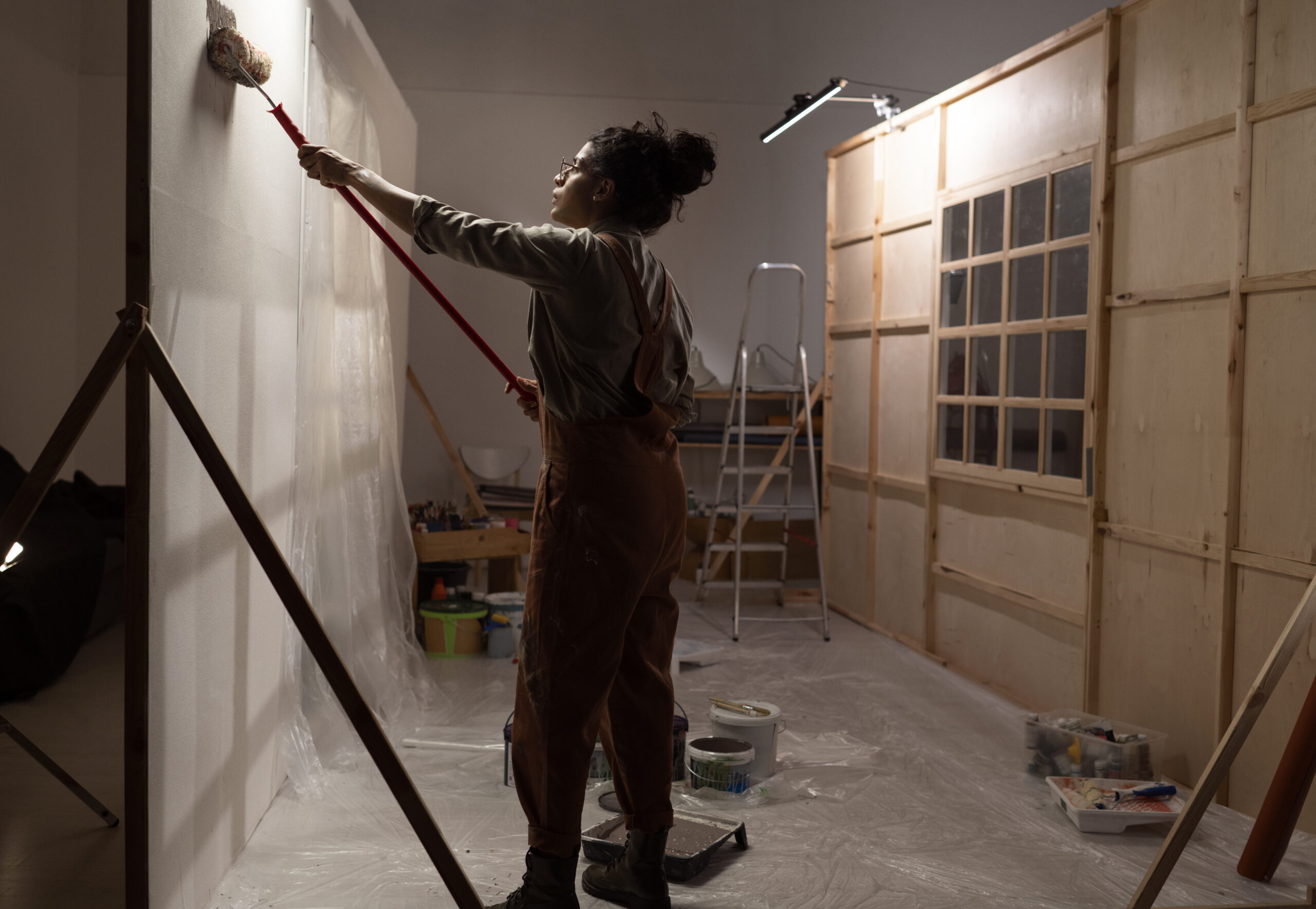
A basement ceiling can become an important part of the room’s overall design, especially when pipes, ducts, wiring, and structural elements are visible overhead. Instead of covering everything with a conventional ceiling, some homeowners prefer to create a more open appearance by using a dark finish. painting basement ceiling black can visually unify exposed components while giving the space a contemporary or industrial character. This approach can work particularly well in entertainment rooms, home gyms, workshops, offices, and finished basements. However, the result depends on proper preparation, suitable paint, lighting, ventilation, and careful attention to the condition of the ceiling and exposed building services.
Why Use a Black Ceiling in a Basement
A dark ceiling can create a distinctive atmosphere without requiring a suspended ceiling system. When the ceiling contains exposed pipes, ductwork, cables, beams, and other elements, a consistent dark color can visually blend these components together.
This approach can also make the basement feel more intentional. Instead of treating visible mechanical elements as something that must always be hidden, they can become part of the room’s design.
A black ceiling may also work well with contemporary furniture, concrete-inspired flooring, wood accents, metal finishes, and warm lighting. The contrast between the dark overhead surface and lighter walls can help establish a balanced visual composition.
Inspecting the Basement Before Painting
Preparation is one of the most important parts of the project. Before applying any paint, inspect the entire ceiling area carefully.
Look for water stains, active leaks, mold, excessive moisture, damaged pipes, loose wiring, rust, or deteriorating surfaces. Painting over an unresolved moisture problem can hide evidence of damage and may lead to further deterioration.
The basement should also have suitable ventilation. If the space is regularly humid, the underlying moisture issue should be addressed before decorative work begins.
Any electrical, plumbing, or HVAC concerns should also be evaluated before painting. Components that should remain accessible should not be permanently obstructed by paint or other finishes.
Preparing Exposed Ceiling Components
Basement ceilings can contain many different materials. Wood, metal, plastic, concrete, and previously painted surfaces may all appear in the same area.
These materials may require different preparation methods. Dust and loose debris should be removed so the paint can adhere properly. Metal surfaces may require rust treatment or an appropriate primer, while previously painted surfaces should be checked for peeling or flaking.
Surfaces with grease, dirt, or residue may require suitable cleaning before painting. Any loose material should be removed carefully.
Preparation is especially important when the ceiling includes old or uneven surfaces because dark paint can make some imperfections more noticeable under strong lighting.
Selecting the Right Paint
The paint should match the basement environment and the materials being coated. A suitable interior paint designed for the intended surface is generally preferable to using one product without considering the substrate.
A matte or low-sheen finish is often considered for ceilings because it can reduce visible reflections and help create a uniform appearance. Higher-sheen finishes may reflect more light and can make surface imperfections more noticeable.
The basement’s moisture conditions should also be considered. If the room experiences persistent humidity, resolving the environmental problem should come before relying on paint to protect the ceiling.
Primer can also be useful where surfaces are porous, stained, bare, or made from materials that require additional adhesion.
Choosing Between Matte and Satin Finishes
The sheen of the paint can significantly influence the finished appearance.
Matte finishes tend to absorb more light and can create a softer, less reflective ceiling. This can be useful when the goal is to make pipes, ducts, and other overhead components visually recede.
Satin or slightly higher-sheen finishes can reflect more light and may be easier to clean in certain applications. However, reflections can highlight uneven surfaces and mechanical components.
The best finish depends on the room’s lighting, ceiling condition, cleaning requirements, and desired appearance. Testing a small area first can help determine how the selected product looks under the basement’s actual lighting.
Preparing the Room
Painting an exposed basement ceiling can be more complicated than painting a conventional flat ceiling because there may be many surfaces overhead.
Furniture and equipment should be removed or covered. Floors should also be protected with appropriate coverings. Walls, windows, lighting fixtures, vents, and other areas that should remain unpainted need suitable protection.
Because paint can travel through small openings and around exposed components, careful preparation can reduce unwanted overspray or splatter.
Adequate ventilation is also important. Doors, windows, fans, or other appropriate ventilation methods can help improve air circulation, provided they are suitable for the space and the paint product being used.
Working Around Pipes and Ducts
Pipes and HVAC ducts often make up a large portion of an unfinished basement ceiling. Painting them the same dark color as surrounding surfaces can create a more unified appearance.
However, not every component should automatically be painted. Certain labels, identification markings, valves, access points, and service components may need to remain visible.
Mechanical equipment should also be treated according to the manufacturer’s recommendations. Heat-producing equipment and components requiring regular inspection should not be obstructed or improperly coated.
Planning the painting sequence can make it easier to cover the ceiling consistently while keeping important service areas accessible.
Lighting Considerations
Lighting can dramatically affect the appearance of a black basement ceiling. A dark surface absorbs more visual light than a white ceiling, so the room may require thoughtful lighting placement.
Recessed fixtures, track lighting, wall-mounted fixtures, and pendant lights can all contribute to the final atmosphere. The placement should correspond to how the basement will be used.
A home theater may benefit from controlled lighting, while a workshop or home office generally requires stronger task illumination.
Light-colored walls and furniture can also help balance the dark ceiling. Warm lighting can create a comfortable atmosphere, while cooler lighting may produce a more contemporary appearance.
Making a Basement Feel More Spacious
A black ceiling does not automatically make a basement feel smaller. The perceived size of the room depends on ceiling height, lighting, wall color, furniture arrangement, and visual clutter.
When the ceiling is relatively low, painting exposed components a consistent dark color can sometimes reduce the visual complexity overhead. Pipes, ducts, and wiring can become less visually prominent instead of appearing as separate elements.
Keeping the walls lighter can provide contrast and help maintain an open feeling. Simple furniture arrangements and adequate lighting can also prevent the room from feeling crowded.
The effect should be evaluated based on the specific basement rather than relying on a general rule about dark colors.
Using Black With Basement Flooring
Flooring is another important element to consider. A dark ceiling can be balanced with lighter flooring materials such as pale wood tones, neutral vinyl, light carpet, or other bright surfaces.
For a more dramatic design, darker flooring can be combined with the ceiling, but additional lighting and contrasting furniture may be needed to maintain visual balance.
Wood accents can introduce warmth into a basement with a dark ceiling. Natural textures, upholstered furniture, rugs, and decorative lighting can also soften the overall appearance.
The ceiling, walls, and floor should work together as a complete color scheme.
Creating an Industrial Style
An exposed basement ceiling naturally lends itself to an industrial-inspired design. Pipes, ducts, beams, and wiring can become visible architectural elements rather than being hidden.
A dark finish can strengthen this appearance by creating a consistent background for the exposed components. Metal furniture, wood surfaces, simple lighting, and concrete-inspired finishes can complement the style.
The goal does not have to be an entirely industrial room. Modern, rustic, and contemporary interiors can also incorporate an exposed dark ceiling when the materials are balanced appropriately.
Considering Fire Safety and Building Requirements
Basements can contain electrical equipment, heating systems, plumbing, and other important building components. Before painting, it is important to consider local building requirements and manufacturer instructions.
Some materials may require specific fire-rated treatments or may not be suitable for certain coatings. Electrical components should never be painted in a way that interferes with their operation, identification, or access.
Smoke detectors, sprinkler components, shutoff valves, electrical panels, and other safety-related equipment should remain accessible and visible as required.
If the ceiling contains complex mechanical or electrical systems, it can be appropriate to obtain advice from a qualified building professional before starting the project.
Spray Painting Versus Rolling
An exposed basement ceiling contains many irregular surfaces, which can make application more challenging than painting a flat ceiling.
Spraying can provide coverage across pipes, beams, ducts, and other components more quickly. However, overspray can travel into surrounding areas, so extensive preparation and protection may be necessary.
Rolling and brushing provide greater control but can take considerably longer when the ceiling has many exposed components.
The method should be selected based on the room layout, materials, ventilation, equipment, and the type of paint being used. Manufacturer application instructions should always be followed.
Maintaining the Finished Ceiling
A painted basement ceiling should be inspected periodically for signs of moisture, peeling paint, staining, rust, or other changes.
Water stains should not simply be repainted without determining their cause. Persistent moisture can damage building materials and create conditions that affect the quality of the finished space.
Dust may also accumulate around pipes, ducts, and other exposed elements. Gentle cleaning methods appropriate for the paint and underlying materials can help maintain the appearance.
If a section becomes damaged during plumbing, electrical, or HVAC work, touch-up painting may be needed after the service work has been completed.
Budgeting for the Project
The cost of painting a basement ceiling depends on the room size, number of exposed components, surface condition, paint type, application method, and amount of preparation required.
An unfinished basement with many pipes and ducts may require more labor than a simple flat ceiling. Additional costs can also arise from cleaning, priming, surface repair, protective coverings, or specialized equipment.
It is useful to calculate the total project requirements before purchasing materials. Buying sufficient paint from the same product batch can also help maintain a consistent finish.
Final Thoughts
A dark basement ceiling can provide a practical way to visually organize exposed pipes, ducts, beams, and other overhead elements while creating a distinctive interior style. The key is to prepare the surfaces properly, address moisture concerns, select suitable paint, protect important components, and plan the lighting carefully. A successful result should also preserve access to electrical, plumbing, HVAC, and safety equipment. With thoughtful preparation and a coordinated color scheme, an exposed basement ceiling can become an intentional design feature that complements the rest of the finished room.
FAQs
Is black a good color for a basement ceiling?
Black can work well in basements where an exposed ceiling or industrial-inspired appearance is desired. The room’s height, lighting, and wall colors should be considered.
Does a black ceiling make a basement look smaller?
It can create a deeper visual effect, but good lighting and contrasting walls and furnishings can help maintain a spacious appearance.
Should basement pipes be painted black?
Some exposed pipes can be painted when the coating is compatible with the material and permitted by applicable requirements. Components requiring identification, access, or special treatment should be handled appropriately.
What type of finish works for a basement ceiling?
Matte or low-sheen finishes are often considered because they reduce reflections, but the appropriate finish depends on the surface, room conditions, and product specifications.
Can an unfinished basement ceiling be painted?
Yes, exposed basement ceilings can be painted when the surfaces are suitable and properly prepared. Moisture, electrical systems, plumbing, HVAC components, and safety requirements should be evaluated first.
Is spraying better than rolling a basement ceiling?
Spraying can provide more even coverage across complex exposed components, while rolling and brushing offer greater control. The appropriate method depends on the project and paint product.
How can lighting work with a black basement ceiling?
Recessed, track, pendant, and wall-mounted fixtures can provide illumination. The lighting plan should reflect how the basement will be used.
Should moisture problems be fixed before painting?
Yes. Leaks, excessive humidity, or other moisture problems should be addressed before decorative painting begins.
